
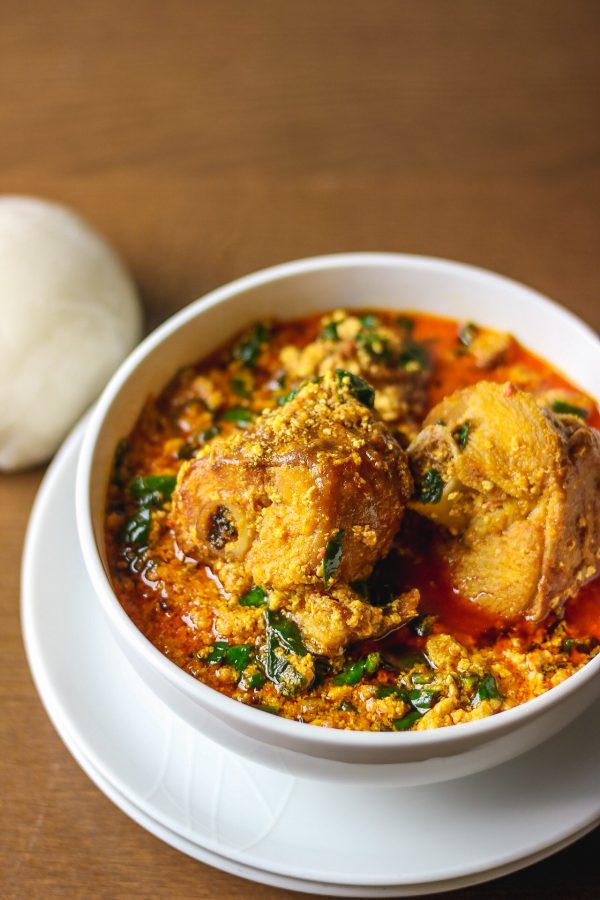
Gbure Elegusi (Waterleaf & Egusi Soup) — Yoruba Healing Pot
A beloved Yoruba classic, this Gbure Elegusi combines the mucilaginous richness of fresh waterleaf with protein-dense ground egusi (melon seeds) to create a deeply nourishing one-pot soup. Lighter and more hydrating than a traditional egusi, it carries a bright herbaceous freshness that makes it ideal as a therapeutic meal for managing blood sugar, heart health, and inflammation. Served alongside oat eba or brown swallow, this is everyday Nigerian wellness food at its finest.
Total Time
55 min
Prep
20 min
Cook
35 min
Servings
4
Cuisine
Nigerian Yoruba
310kcal
Calories
24g
Protein
12g
Carbs
18g
Fat
5g
Fiber
How to Make It
- 1
Prepare Your Waterleaf
Wash the waterleaf thoroughly in two changes of clean water to remove grit and debris. Roughly chop into 3–4cm pieces. Place in a colander and press gently to release excess water — do not over-squeeze, as the natural liquid helps cook the egusi. Set aside.
Tip: Never pre-cook waterleaf separately. Adding it fresh at the end preserves its folate, vitamin C, and mucilaginous fibre that benefits gut health. - 2
Blend the Pepper Base
In a blender, combine the tatashe, scotch bonnet, and half of the diced onion. Blend to a smooth paste. Pour into a dry pan and fry on medium heat for 8–10 minutes, stirring frequently, until the raw smell disappears and the paste reduces by about one-third. This step is called 'frying off the pepper.'
Tip: Frying off the blended pepper before adding to soup prevents a sour raw taste and reduces the overall cooking time of your soup. - 3
Mix and Rest the Egusi
Place the ground egusi in a bowl. Add 4–5 tablespoons of water and mix with your hand or a spoon until it forms a thick, slightly sticky paste. Let it rest for 5 minutes. This resting period activates the proteins and helps the egusi cook into distinct, nutty lumps rather than dissolving into the soup.
Tip: For diabetic patients, dry-roasting the egusi before grinding adds a richer flavour, so you use less overall quantity — reducing caloric density while maintaining satiety. - 4
Build the Soup Base
Heat the palm oil in a medium pot over low-medium heat until it becomes liquid and slightly shimmery — do not overheat to smoking point. Add the remaining diced onion and sauté for 2 minutes. Add the minced garlic, grated ginger, and locust beans (iru), and stir for 1 minute until fragrant. Add the fried pepper paste and stir well to combine everything.
Tip: Heating palm oil gently rather than bleaching it (overheating until clear) preserves its powerful antioxidants — tocotrienols and carotenoids — which are critical for cardiovascular protection. - 5
Cook the Egusi in the Soup
Pour in the low-sodium stock and bring to a gentle simmer. Using a spoon or your fingers, drop the egusi paste into the simmering pot in small rough clumps — each clump roughly the size of a teaspoon. Do not stir for the first 5 minutes. Allow the egusi clumps to set and firm up. After 5 minutes, gently stir once to distribute without breaking all the lumps. Cover and cook on low-medium heat for 10–12 minutes.
Tip: Dropping egusi in clumps rather than mixing it smooth creates the characteristic textured 'chunks' that make Gbure Elegusi unique and satisfying. If you stir too early, you will get a smooth porridge-style egusi instead. - 6
Add the Protein and Seasoning
Add the flaked smoked mackerel and shredded stockfish to the pot. Stir gently. Add the ground crayfish, ground ehuru (calabash nutmeg), and season with salt. Stir everything together carefully to avoid breaking the fish. Taste and adjust — the soup should be savoury, slightly smoky, and fragrant. Cook for another 5 minutes on low heat.
Tip: Smoked mackerel is already partially cooked and salted, so add it later in the cooking process to preserve its omega-3 content and avoid over-cooking, which degrades healthy fats. - 7
Add the Waterleaf and Finish
Add the prepared waterleaf directly into the pot. Fold it gently into the soup using a large spoon — do not stir aggressively. The waterleaf will wilt rapidly within 2–3 minutes and release its natural liquid, slightly loosening the soup to its ideal consistency. Cook uncovered for exactly 3 minutes on medium heat. Remove from heat immediately to preserve nutrients and colour.
Tip: Overcooking waterleaf beyond 3–4 minutes destroys its vitamin C and folate. The bright green colour fading to a dull olive is your visual cue that overcooking has occurred — pull it off the heat while still vibrant. - 8
Rest and Serve
Allow the soup to rest off the heat for 2–3 minutes before serving. This allows flavours to meld and the egusi to finish absorbing the liquid. Serve hot with oat eba, brown amala, or unripe plantain swallow for a complete, low-glycaemic Nigerian meal.
Tip: For weight management and diabetes: pair with a small portion of oat eba (80–100g dry weight) rather than white garri. For kidney health patients: omit stockfish entirely and reduce crayfish to 15g to lower potassium and phosphorus load.
Want this in your meal plan?
Get personalised meal plans, track your nutrition, and access 500+ recipes tailored to your health goals.
Get started free